For the first time in ~18 years,
I am genuinely excited to use Perl 6 (Raku) again.
<…> Finally usable for real-world scenarios!
perlancer on X
The Raku++ project started on July 1. Today it’s been about two months since then, so let me tell you about some external activities where other people are already using this compiler.
Before we go on, a side note: Raku++ is the name of the project, and rakupp is the name of the binary file. But both names can be (and are) used to refer to the project.
Platforms
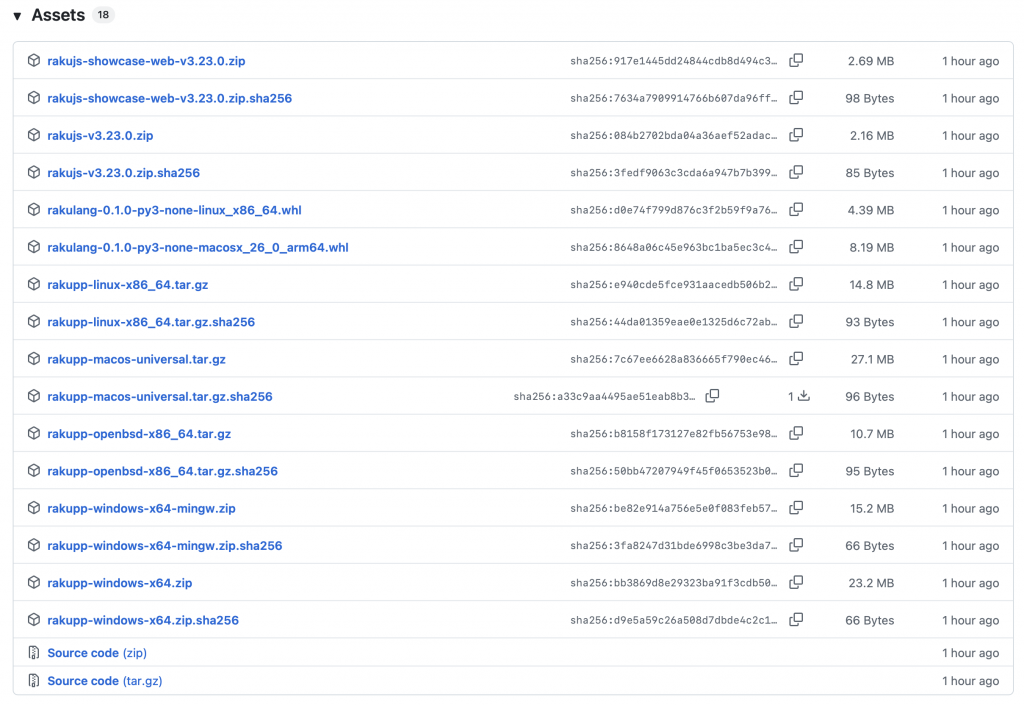
The first few requests appeared just a few days after the first public version. Originally, I created releases for macOS, Linux, and Windows only. But people indicated their interest in running Raku++ on other platforms. So the list was extended with MinGW (a runtime that lets you running GCC on Windows), OpenBSD (requested by e-mail rather than via GitHub issues). The users also contribute code adding GNU Guix (pronounced geeks) and NixOS support.
CI and Sparrow
Alexey Melezhik enthusiastically tried using Raku++ in his Sparrow automation framework. The framework itself is written in Raku, and it can start the tasks written in different languages, varying from Bash to Raku. A number of bug reports and requests allowed him to fully run Sparrow tasks in Raku++ and the DSCI (dead-simple CI) of his Sparrow project can be run under Raku++ too.
The main advantage of Raku++ is its speed. The automation framework starts a lot of tasks, so both the startup time and the execution time add up really quickly.
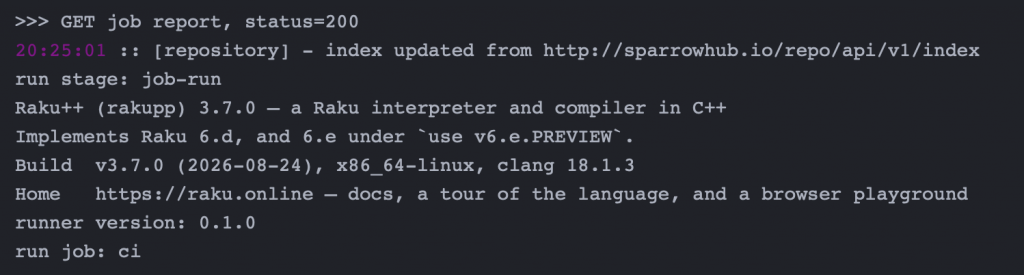
Alexey also reported that apart from speeding everything up, switching to Raku++ allowed him to save both memory and CPU resources.
Wolfram Language
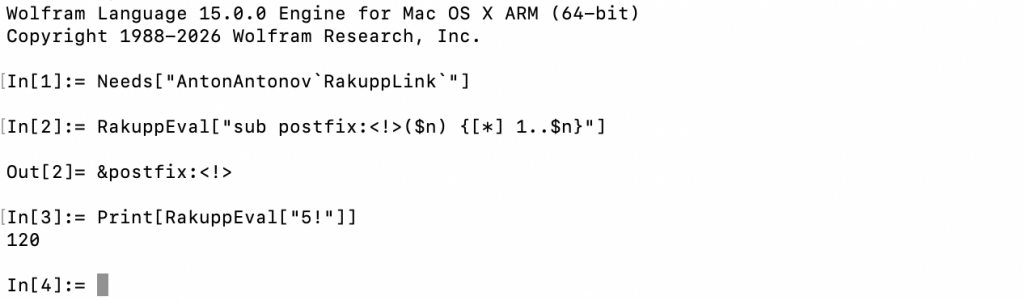
Anton Antonov was interested in using Raku++ as an extension of the Wolfram Language. Wolfram products are a separate world: even if you’ve heard of, say, Mathematica or Wolfram|Alpha, you may never realise the fact how huge this Universe is. Nevertheless, RakuppLink is now available in the official Wolfram Language paclet repository.
Raku Playground
(Not to be confused with the Raku++ Playground).
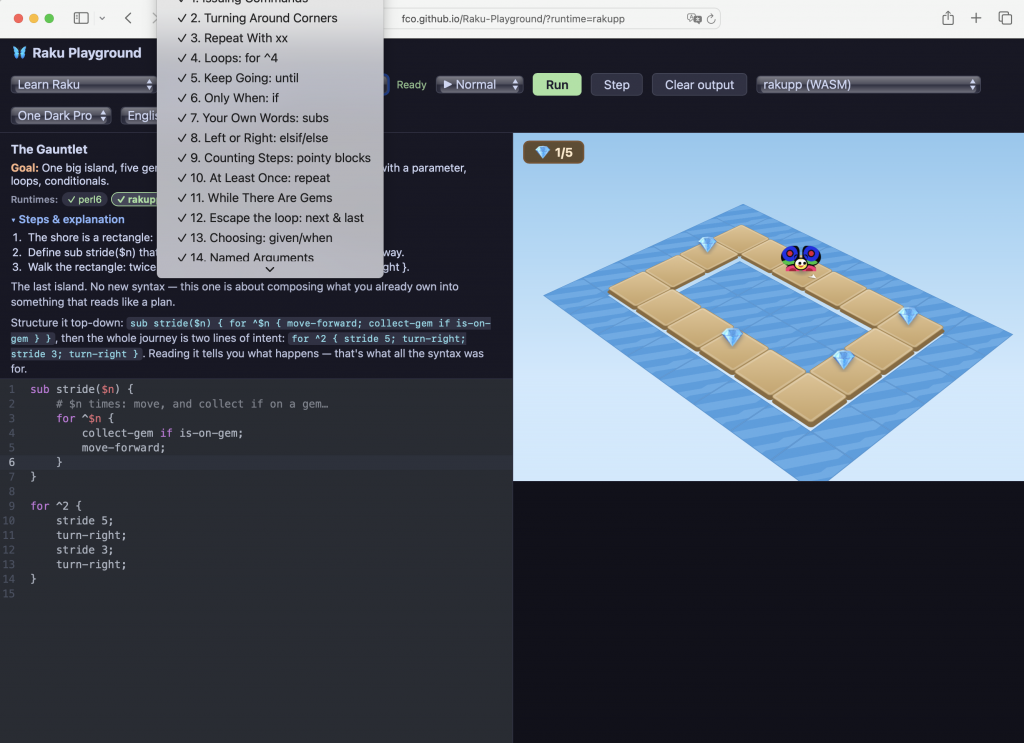
Fernando Correa de Oliveira added the rakupp WASM option to the list of engines in his Raku Playground. This is a nice integrated web tool that helps to learn Raku as a programming language. It has a number of chapters with a few lessons in each. A student writes code in Raku, which the Playground will run. The cool part of such playgrounds is that you allow the user to use a real programming language: so when you learn, you may play with the language rather than typing in the exact phrases the lesson demands.
I played with the first series called Learn Raku, and all the examples run under Raku++ with ease. Well, Camelia fell down a few times, but that’s my code’s fault, not Raku’s.
Explore more horizons
The Raku++ repository contains a number of binding examples of how to connect the Raku++ lib using ABI or FFI, in other words, you can embed Raku in code in other languages, as well as import other existing libraries into your Raku program. This is a big topic for another post the other day.
All the links to the above software, as well as more working examples and showcases are gathered together at the In Use page on raku.online.